
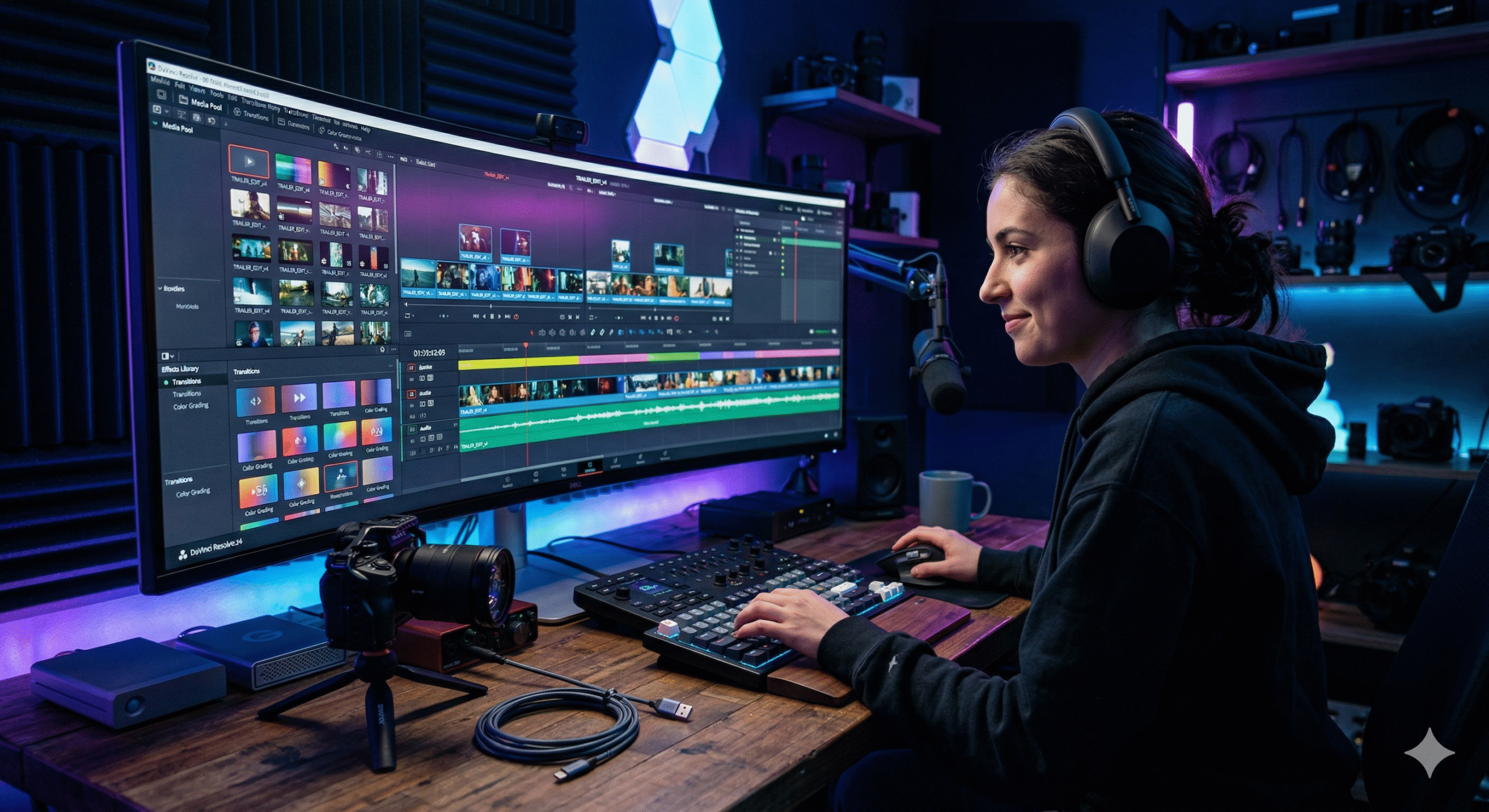
From Raw Footage to Reel Magic — Your Ultimate Guide to the Art of Video Editing
Introduction: The Invisible Art That Makes You Feel Everything
Think about the last time a film made you cry. Or a YouTube short made you laugh so hard you nearly choked on your coffee. Or a brand video made you reach for your wallet before you even realized it.
That wasn’t just good acting. That wasn’t just a beautiful location or a high-end camera.
That was editing.
Video editing is the invisible art — the craft that sits quietly behind every frame and makes you feel something. It’s the magic that transforms hours of raw, unorganized footage into a coherent, emotional, powerful story. And in today’s creator economy, where video dominates every screen and every scroll, mastering this craft is no longer optional. It’s essential.
Whether you’re an aspiring filmmaker, a content creator, a marketing professional, or someone who just wants to turn memories into movies — this guide is your starting point. Let’s unpack what video editing really is, break down its core pillars, and explore why investing in proper video editing courses and training can change the trajectory of your creative career.
Chapter 1: What Is Video Editing — Really?
Most people think video editing is just “cutting out the bad parts.” That’s like saying cooking is just “heating food.”
Video editing is the process of selecting, arranging, and transforming raw video clips into a finished visual story. It’s both a technical discipline and a deeply artistic one. A great editor is equal parts storyteller, psychologist, and technician.
Here’s what editing actually involves:
- Selection — Choosing which shots to use and which to discard
- Sequencing — Arranging clips in a way that creates rhythm, pacing, and narrative flow
- Transitions — Connecting scenes in ways that feel natural or intentionally jarring
- Color Grading — Setting the emotional mood through the visual “temperature” of the footage
- Sound Design — Weaving music, dialogue, and ambient sound into a cohesive audio experience
- Motion Graphics — Adding text, titles, animations, and visual effects to enhance storytelling
- Export & Delivery — Formatting the final product for different platforms and audiences
Each of these is a skill in itself. Together, they constitute the full craft of video editing.
Chapter 2: The Three Pillars — Cut, Color, Create
✂️ CUT — The Language of Rhythm
The cut is the most fundamental tool in an editor’s arsenal. Every time you switch from one shot to another, you’re making a cut. But the when and why of a cut is where art enters the equation.
Types of cuts every editor must know:
- The Hard Cut — An abrupt transition between two shots. Simple, clean, effective.
- The Jump Cut — A cut between two similar shots that creates a jarring, energetic effect. Popularized by YouTube creators and French New Wave cinema alike.
- The Match Cut — Cutting on action or visual similarity to create a seamless flow. Think of the bone-to-spaceship cut in 2001: A Space Odyssey.
- The L-Cut and J-Cut — Audio from the next scene begins before the visual does (or vice versa), creating a smooth, cinematic transition.
- The Cutaway — Briefly showing something else before returning to the main action. Great for adding context or building tension.
Mastering the cut is about developing an instinct for rhythm — knowing when to let a moment breathe and when to fire off rapid-cuts that energize the audience.
Pro Tip: Watch your favorite film or video with the sound off. Pay attention to when and why cuts happen. This trains your editing eye faster than almost anything else.
🎨 COLOR — The Emotion You Can See
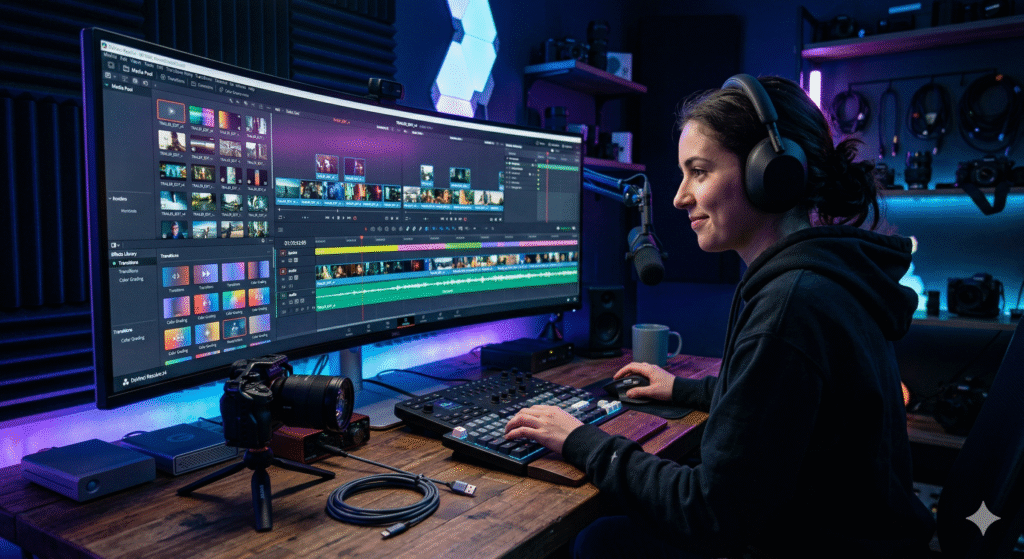
Color grading is the process of altering and enhancing the color of a video’s footage. It’s one of the most powerful and underappreciated tools in post-production.
Color affects:
- Mood — Cool blues feel lonely or tense. Warm oranges feel nostalgic or safe.
- Time of day — A golden grade can make noon footage feel like magic hour.
- Genre — Thrillers often go desaturated and teal-orange. Romantic comedies love warm, high-saturation looks.
- Brand identity — Consistent color grading builds visual brand recognition across all content.
Two stages of color work:
- Color Correction — The technical stage. Fixing exposure, white balance, and consistency across clips so everything looks “normal” and balanced.
- Color Grading — The creative stage. Applying a stylistic look or “LUT” (Look-Up Table) to give the video its emotional fingerprint.
Tools like DaVinci Resolve have made professional color grading accessible to independent creators. But knowing how to use the tools is only half the equation — knowing why you’re making each choice is what separates a colorist from a true visual storyteller.
🎬 CREATE — Where Everything Comes Together
The “create” stage is where all elements synthesize. This is where:
- Music and sound design are layered to amplify emotion
- Motion graphics and titles give context and identity
- VFX and compositing add polish, magic, or information
- Pacing and structure are fine-tuned until the edit breathes naturally
This is also where editors develop their personal style — their voice. Just as writers have prose styles and photographers have visual signatures, editors develop a distinctive approach to how they shape a story.
The “create” stage is deeply personal. It’s why two editors given the same footage will produce two completely different films.
Chapter 3: The Tools of the Trade
The video editing software landscape has never been more powerful — or more accessible. Here’s a quick overview of the most widely-used platforms:
Adobe Premiere Pro The industry standard for film, TV, and content creation. Seamlessly integrates with After Effects, Audition, and the full Adobe Creative Cloud suite. Widely taught in professional video editing courses worldwide.
DaVinci Resolve Originally a professional color grading tool, DaVinci has evolved into a full-featured editing powerhouse with a free version that rivals paid software. Exceptional for color work and increasingly popular in film production.
Final Cut Pro Apple’s professional editing solution, optimized for Mac. Beloved for its speed, magnetic timeline, and intuitive workflow. Popular in the content creator community.
CapCut & InShot Mobile-first editing platforms that have democratized video creation for short-form content. Essential for creators building audiences on Instagram Reels and YouTube Shorts.
After Effects The king of motion graphics and visual effects. Not a traditional editing tool, but an essential companion for any editor who wants to add animated titles, visual effects, or infographics.
The right tool depends on your goals. But here’s the truth: the software is just a vehicle. The real skill lives in the mind of the editor — and that’s developed through learning, practice, and mentorship.
Chapter 4: Why Formal Training Accelerates Everything
You can technically learn anything on YouTube. But there’s a difference between consuming fragments of knowledge and receiving structured, mentored education that builds your skills systematically.
Here’s why pursuing a proper video editing course or training program is a smart investment:
1. Structure Eliminates the “What Do I Learn Next?” Problem
Self-taught editors often develop random skill sets — excellent at one thing, completely unaware of another. A structured curriculum ensures you build a complete foundation, from the basics of file management to advanced color science.
2. Real Feedback Transforms Your Work
One of the most powerful growth accelerants is getting your edits reviewed by an experienced professional who can tell you exactly what’s working and what isn’t. That feedback loop is hard to replicate on your own.
3. Industry-Relevant Workflows
Professional editing isn’t just about pressing buttons. It’s about understanding project organization, collaboration workflows, client communication, and delivery formats. Formal training integrates these real-world practices.
4. A Portfolio You Can Be Proud Of
Quality training programs assign real projects — short films, brand videos, documentary sequences — that you can immediately add to a professional portfolio.
5. Community and Networking
Learning alongside other aspiring editors creates connections that often lead to collaborations, referrals, and career opportunities.
Chapter 5: Video Editing Training in Jodhpur — A Rising Hub for Creative Education
Jodhpur — the Blue City of Rajasthan — has long been celebrated for its art, architecture, and visual heritage. But over the past few years, it has quietly emerged as a growing destination for creative and digital education.
For anyone seeking video editing training in Jodhpur, the city’s ecosystem is evolving rapidly. With the rise of digital content demand — from local businesses creating promotional videos, to travel creators capturing the city’s stunning landscapes, to a new generation of filmmakers telling Rajasthani stories — the appetite for skilled video editors has never been higher.
Why Learn Video Editing in Jodhpur?
The Creative Context is Unmatched Jodhpur is a visual paradise. The Mehrangarh Fort, the indigo-painted havelis of the old city, the sweeping Thar Desert — this city is a filmmaker’s dream. Learning video editing here means you’re surrounded by compelling subject matter the moment you step outside with a camera.
The Local Economy Has Appetite for Your Skills From hospitality and tourism brands to local wedding cinematographers, from boutique businesses to regional news outlets — the demand for skilled video editors in Jodhpur is growing steadily. Completing a video editing course in Jodhpur positions you directly within a market hungry for your expertise.
Cost of Learning Is More Accessible Compared to metro cities, high-quality training in Jodhpur typically comes at a more accessible price point — making it an excellent choice for students and early-career creatives who want professional-grade education without the metro-city cost.
The Growing Startup and Creator Scene A younger generation of entrepreneurs and content creators in Jodhpur is increasingly investing in video as a core communication tool. From food bloggers and travel vloggers to local brands building their digital presence, there’s a rising ecosystem of people who need well-edited video content.
Chapter 6: What to Look for in a Video Editing Course
Whether you’re exploring video editing courses online or looking at video editing training in Jodhpur specifically, here are the key factors to evaluate before enrolling:
✅ Curriculum Depth
Does it cover the full workflow — from project setup and importing to export and delivery? Does it include color grading, audio editing, and motion graphics, or just basic cutting?
✅ Software Coverage
Does the course teach industry-standard tools like Adobe Premiere Pro or DaVinci Resolve, or does it focus on beginner-only apps?
✅ Hands-On Projects
The best courses assign real editing projects — not just tutorials to follow along with. You should be making actual, original edits from day one.
✅ Instructor Experience
Is the instructor an active professional editor with real credits, or just someone who learned from YouTube themselves? Mentorship from working professionals is invaluable.
✅ Portfolio Development
Does the course help you build a portfolio of work you can show to potential clients or employers?
✅ Post-Course Support
Does training end at the last class, or do students have access to ongoing feedback, community, or job placement assistance?
Chapter 7: Career Paths in Video Editing — Where Can This Take You?
One of the most exciting things about mastering video editing is the sheer breadth of career paths it opens up. This is not a narrow skill — it’s a gateway into multiple creative industries.
Film & Television The traditional and still-prestigious route. Editors work on feature films, web series, documentaries, and TV shows. It requires deep storytelling instincts and the ability to collaborate closely with directors.
Commercial & Advertising Brands constantly need video content. Ad agency editors work on everything from 15-second social media spots to full-length brand films. Fast-paced, lucrative, and creatively stimulating.
Wedding & Event Videography One of the most accessible entry points. Wedding editors are in high demand across India — and exceptional editors build loyal client bases through referrals and reputation.
Content Creation & YouTube Many creators edit their own content. But as channels grow, they hire editors. Being a skilled editor for a successful YouTuber can be a well-paying, flexible career.
Corporate Video Production Companies of all sizes — from startups to multinationals — need training videos, product demos, internal communications, and investor presentations. Corporate video editors enjoy consistent work and good pay.
Freelance Editing Platforms like Upwork, Fiverr, and direct client networks allow skilled editors to build thriving independent businesses. Many editors who complete formal video editing courses launch their freelance careers within months.
Motion Graphics & Visual Effects Editors who extend their skills into After Effects and motion design become even more valuable — capable of delivering full post-production packages independently.
Chapter 8: Building Your Editing Practice — Daily Habits of Great Editors
Technical skill is necessary. But the editors who truly excel develop certain habits and mindsets that separate them from the rest.
Watch films with intention. Great editors are voracious consumers of cinema, documentary, and visual media — but they watch analytically. They ask: why did the director cut here? Why does this scene feel urgent? What’s the music doing beneath this dialogue?
Edit every day. Like any creative skill, editing atrophies without practice. Even 30 minutes of working through a personal project each day accelerates growth dramatically over months.
Seek feedback actively. Don’t wait for someone to critique your work. Show your edits to other editors, directors, and even non-creative viewers. Different perspectives reveal different weaknesses.
Study audio as deeply as video. Sound design and music are frequently underestimated by new editors. The majority of a viewer’s emotional experience comes through their ears. Master audio and your edits will feel 10x more professional.
Organize obsessively. Professional editors work on complex projects with thousands of files. Disciplined project organization — clear folder structures, properly labeled clips, clean timelines — is the mark of a true professional.
Develop your aesthetic vocabulary. The more visual culture you consume — photography, painting, architecture, design — the richer your sense of composition, color, and storytelling will become.
Chapter 9: The Future of Video Editing — What’s Coming
The landscape of video editing is evolving faster than ever. Here’s what the near future looks like:
AI-Assisted Editing Tools like Adobe’s AI-powered Sensei, Runway ML, and others are beginning to automate rough cuts, remove silences, generate B-roll suggestions, and even create rough assemblies. This doesn’t replace editors — it frees them to focus on higher-order creative decisions. But it does mean that editors who understand AI tools will have a significant advantage.
Short-Form Mastery The rise of Reels, Shorts, and TikTok has created a new editing grammar — faster cuts, vertical framing, hook-first storytelling. Mastering short-form editing alongside long-form narrative is increasingly valuable.
Immersive and Interactive Video 360-degree video, VR content, and interactive storytelling platforms are emerging new frontiers. Early expertise in these formats positions editors for premium opportunities.
Real-Time Collaboration Cloud-based editing platforms like Frame.io and Splice are enabling real-time remote collaboration between editors, directors, and clients — changing how editorial workflows are structured.
The core skills — storytelling, rhythm, visual language — will never become obsolete. But the editors who stay curious, adaptable, and consistently learning will thrive in whatever landscape emerges.
Conclusion: The Edit Begins With You
There’s a famous quote often attributed to Walter Murch, one of cinema’s greatest editors, about the edit being “the invisible art.” It works when it works so well that you don’t notice it — when the story just flows, when the emotion just lands, when the viewer is so absorbed in the experience that they forget someone shaped every single frame they’re watching.
That invisibility is the ultimate compliment.
And learning to achieve it is one of the most rewarding creative journeys you can undertake.
Whether you’re in Mumbai, Delhi, or right here in the Blue City — whether you’re exploring video editing courses online or seeking dedicated video editing training in Jodhpur — the tools, the opportunities, and the market have never been more accessible.
The raw footage of your future is already waiting.
It’s time to cut, color, and create.